
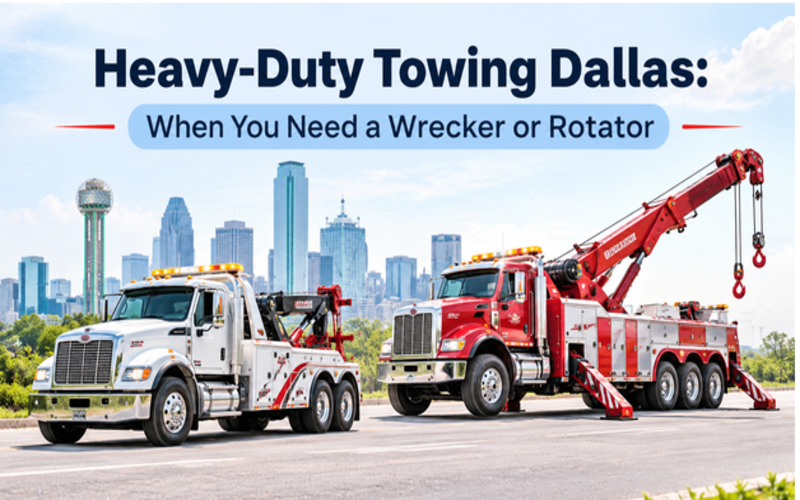
When a semi truck, bus or loaded box truck goes down in Dallas, a regular tow truck won’t cut it. These vehicles can weigh many times more than a car, and moving them safely takes specialized equipment and trained operators.
Heavy-duty towing also costs more and takes more planning, so knowing what to expect helps you make faster decisions. Here’s a plain-language guide for truck drivers, fleet managers and business owners in DFW.
Heavy-duty towing is needed for large vehicles like semi trucks, tractor-trailers, buses, dump trucks, large box trucks, Class A motorhomes and construction equipment. These usually need a heavy-duty wrecker, and accidents or rollovers may need a rotator. To speed things up, dispatch the vehicle type, weight, whether it’s loaded, what happened and your exact location.
What Counts as Heavy-Duty?
Tow trucks are usually grouped by the size of the vehicles they move:
| Category | Typical vehicles | Common equipment |
|---|---|---|
| Light duty | Cars, SUVs, small pickups | Flatbed, wheel-lift |
| Medium duty | Box trucks, delivery vans, small buses, Class C RVs | Medium-duty wrecker or flatbed |
| Heavy duty | Semi trucks, tractor-trailers, city buses, dump trucks, Class A RVs | Heavy-duty wrecker, rotator |
If your vehicle is a commercial truck or anything over about 26,000 pounds, plan on heavy-duty service.
Common Reasons for Heavy-Duty Towing
Mechanical breakdowns. Engine, transmission or driveline failures that can’t be fixed roadside.
Accidents. A truck that’s been in a collision may be damaged, leaking or unsafe to drive.
Rollovers and jackknifes. These need careful recovery to lift the truck upright without making the damage worse.
Stuck vehicles. A truck sunk in mud on a job site, slid into a ditch or stuck on soft ground.
Fleet moves. Moving a non-running truck to a shop, yard or dealer.
Dallas has its share of tough roads for big trucks. Our post on the most dangerous roads in Dallas covers where trouble happens most.
Wrecker vs. Rotator: What’s the Difference?
A heavy-duty wrecker lifts one end of a large vehicle, usually the front, and tows it on its rear wheels. It’s the standard choice for breakdowns.
A rotator is a heavy-duty wrecker with a crane-like boom that can turn. It’s used for complex recoveries, like rollovers, vehicles off the road or trucks in tight spaces where a regular wrecker can’t get the right angle.
You don’t have to know which one you need. Describe the situation, and the dispatcher will decide.
What to Tell the Dispatcher
The right information gets the right equipment there faster:
- Vehicle type: semi, bus, dump truck, box truck, RV or equipment
- Make, model and approximate weight
- Loaded or empty, and what the load is
- What happened: breakdown, accident, rollover or stuck
- Exact location: highway, direction, exit, mile marker or job site address
- Whether anyone is hurt or a lane is blocked
- Hazmat, if any
If there are injuries or a lane is blocked, call 911 first.
What Happens to the Load?
A loaded trailer can be very heavy. Depending on the weight and the damage, the crew may tow the truck and trailer together, tow them separately or, in some cases, arrange for the load to be transferred before the move. Let your dispatcher, broker and insurance company know as early as possible.
How Much Does Heavy-Duty Towing Cost?
Heavy-duty towing usually costs more than light-duty towing because of the equipment, fuel and labor involved. Common price factors:
- Vehicle size and weight
- Distance
- Whether it’s a simple tow or a recovery
- Time spent on scene
- Time of day
- Extra equipment, like a rotator or second truck
We give a clear quote before dispatch whenever the situation allows. For complex recoveries, we’ll explain the costs as soon as we’ve assessed the scene. See our towing cost guide for general price info.
How to Choose a Heavy-Duty Towing Company
- Right equipment: wreckers and rotators rated for your vehicle
- Trained operators with heavy recovery experience
- Proper licensing and insurance
- 24/7 availability, because breakdowns don’t wait
- Clear pricing and communication
Fleet Owners: Plan Ahead
If you manage trucks in DFW, set up a towing relationship before you need it. Save the number in every cab, share your fleet details with the towing company and agree on how billing will work. It saves valuable time in an emergency.
Heavy-Duty Towing Across DFW, 24/7
DA Cheap Towing’s fleet includes rotator wreckers and heavy-duty equipment operated by certified recovery technicians. We provide heavy-duty towing, truck towing, trailer towing and RV towing across Dallas, Irving, Plano and the rest of DFW.
Call (214) 206-4521 or request a quote.
Frequently Asked Questions
What is heavy-duty towing?
Towing for large vehicles like semi trucks, buses, dump trucks, Class A RVs and construction equipment, using heavy-duty wreckers or rotators.
When do you need a rotator tow truck?
For rollovers, vehicles off the road, tight spaces or other complex recoveries where a standard wrecker can’t safely lift the vehicle.
Can you tow a semi with a loaded trailer?
Sometimes. It depends on weight and damage. In some cases, the load may need to be transferred first.
How much does heavy-duty towing cost in Dallas?
It depends on vehicle weight, distance, recovery work and equipment. Get a quote from the towing company before dispatch when possible.
Do you offer 24/7 heavy-duty towing?
Yes. DA Cheap Towing provides heavy-duty towing 24 hours a day across Dallas-Fort Worth.