
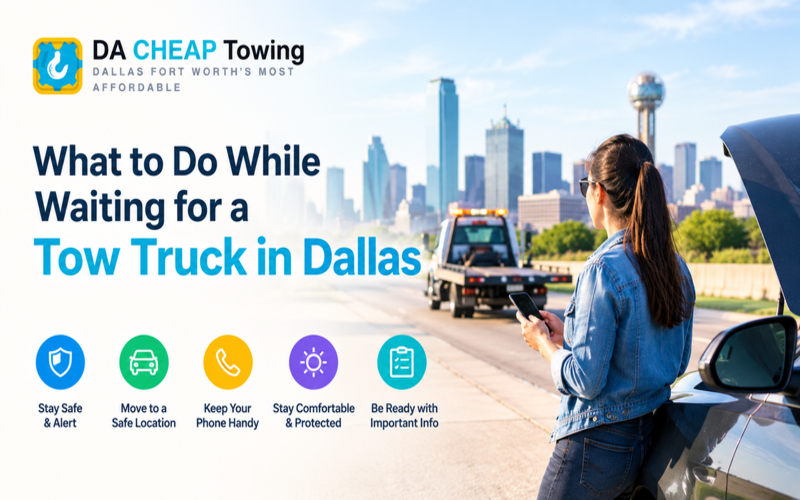
The call is made. Help is on the way. Now you’re sitting on the shoulder of I-635 or a side street in Oak Cliff, hazards blinking, wondering what to do next.
Those 30 to 45 minutes can feel like hours. But how you spend them makes a real difference. The right steps keep you safe, protect your car and make the tow faster once the driver arrives.
We’ve towed thousands of vehicles across Dallas-Fort Worth, and our drivers see the same situations every day. Here’s what we tell every customer while they wait for a tow truck in Dallas.
While waiting for a tow truck in Dallas, stay in a safe spot with your hazard lights on, keep your seatbelt fastened if you’re on a highway, and only exit on the side away from traffic. Share your exact location, gather your keys, documents and valuables, take photos of your car, and confirm the tow driver’s company name and price before your vehicle is hooked up.
1. Make Your Safety the First Priority
Your car can be replaced. You can’t. Before anything else, think about where you are and how close you are to moving traffic.
If you’re on a highway like I-35E, I-30, US-75 or the Dallas North Tollway:
- Pull as far onto the shoulder as you safely can.
- Turn your wheels away from traffic.
- Stay in the car with your seatbelt on unless it’s unsafe to stay inside, such as smoke or fire.
- If you must get out, exit on the passenger side and move well away from the road, behind a guardrail if there is one.
If you’re on a city street or in a parking lot, you have more options. You can usually wait inside a nearby business or on the sidewalk, away from the car.
If your car is stopped in a travel lane or anyone is hurt, call 911 first. A car blocking traffic is an emergency, and police can help protect the scene.
2. Make Your Car Easy to See
Other drivers need to know you’re there, especially at night or in bad weather.
- Turn on your hazard lights and leave them on.
- Turn on your interior dome light at night so other drivers can see the car is occupied.
- Set out reflective triangles or flares behind the car if you have them and it’s safe to walk there.
- Raise your hood if it’s safe, a common signal that you need help.
Texas has a Move Over or Slow Down law that applies to tow trucks and emergency vehicles with flashing lights. Plenty of drivers still don’t follow it, so don’t count on it.
3. Share Your Exact Location
The faster your tow driver can find you, the sooner you’re off the road. “I’m on 635” covers a lot of ground.
Give the dispatcher:
- Highway or street name
- Direction of travel, like eastbound I-30 or northbound US-75
- Nearest exit, cross street or mile marker
- Landmarks, like a gas station, overpass or shopping center
- Which lane or side you’re on, including whether you’re in a toll or express lane
If you can, drop a pin on your phone and text it. Then keep your phone on and charged so the driver can call when they’re close.
4. Deal With the Dallas Weather
Dallas weather can turn a breakdown into a safety issue on its own.
In summer heat: a car without AC can get dangerously hot quickly. Keep windows cracked, drink water and get out of the car to a shaded, safe spot if staying inside isn’t safe. Never leave children or pets in a parked car.
In storms: North Texas thunderstorms can bring hail, high winds and flash flooding. If water is rising around your car, get to higher ground. Never try to walk or drive through moving water.
In cold snaps: stay inside the car if it’s safe, use blankets or extra layers and run the engine only in short bursts if the exhaust pipe is clear of snow or debris.
5. Gather Your Keys, Documents and Valuables
Once you’re safe, use the wait to get ready. Your car may be going to a shop or storage lot where you can’t easily get into it.
Take with you:
- Phone and charger
- Wallet, purse and cash
- Car keys and any spare key, or have them ready for the driver
- Registration and insurance card
- Garage door openers or toll tags you may need
- Medication, glasses and important personal items
- Laptops, tablets or work equipment
If your car will be dropped at a shop after hours, ask the dispatcher where to leave the keys.
6. Take Photos of Your Car
A few quick photos protect you later. Walk around the car, if it’s safe, and photograph:
- All four sides
- Any existing scratches, dents or damage
- The dashboard and odometer
- The scene, if you were in an accident
This gives you a simple record of your car’s condition before the tow. Reputable tow companies welcome it.
7. Check Your Insurance or Roadside Coverage
While you wait, check whether your auto insurance, credit card or car warranty includes towing or roadside assistance. Many drivers have coverage and don’t realize it.
Our guide on whether insurance covers towing in Dallas explains what to look for and how to file.
8. Decide Where the Car Is Going
Know your destination before the tow truck arrives. It saves time and avoids an extra trip.
- Your regular mechanic or dealership
- Your home, if repairs can wait
- A body shop, if your insurance is handling an accident claim
Have the address and phone number ready. If you’re not sure, ask the driver for options.
9. Verify the Tow Truck Before It Touches Your Car
This step matters more than most people think. Before your car is hooked up:
- Check that the company name matches the company you called.
- Look for the TDLR license information. Towing companies in Texas are licensed by the Texas Department of Licensing and Regulation, and tow trucks should display company and license details.
- Confirm the price you were quoted.
- Ask where the car is going and get a receipt.
If a tow truck shows up that you didn’t call, especially after an accident, you’re generally not required to use it. Unless police have ordered a tow, you can wait for the company you chose.
What to Do When the Tow Truck Arrives
- Let the driver assess the car and the scene.
- Tell them if your car is AWD, 4WD, a luxury car, an EV or has low ground clearance. These usually need a flatbed tow. Our article on which vehicles require flatbed towing explains why.
- Ask whether you can ride along. Policies vary by company and situation.
- Get the driver’s name and a receipt before they leave.
Common Mistakes to Avoid
- Standing between your car and traffic. It’s the most dangerous place to be.
- Trying to fix the car on a busy highway. Let a professional handle it.
- Accepting help from a random tow truck that wasn’t called.
- Leaving valuables in the car.
- Agreeing to a tow without a price.
Fast, Affordable Emergency Towing in Dallas
If you need a tow truck in Dallas right now, DA Cheap Towing is available 24 hours a day. Local tows start at $85 with a flat rate quoted before dispatch, and our average arrival time is 30 to 45 minutes.
We provide emergency towing in Dallas, car towing, roadside assistance and more across Plano, Irving, Richardson, McKinney and Farmers Branch.
Call (214) 206-4521 or request a free quote. For more safety steps, see our car breakdown checklist.
Frequently Asked Questions
Should I stay in my car while waiting for a tow truck?
On a highway, staying in the car with your seatbelt on is usually safest. Get out only if there’s smoke, fire or another immediate danger, and exit away from traffic.
How long does it take for a tow truck to arrive in Dallas?
It depends on traffic, time of day and location. DA Cheap Towing’s average arrival time is 30 to 45 minutes across DFW.
Do I have to use a tow truck that shows up at my accident?
Generally no. Unless police order a specific tow, you can choose your own tow company.
How do I know if a tow company is licensed in Texas?
Texas towing companies are licensed by TDLR. You can look up a company’s license on the TDLR website.
What should I take out of my car before it’s towed?
Your phone, wallet, keys, registration, insurance card, medication and any valuables.